China The US in Space - Competition or Collaboration?
The six-or-so decades that passed since the beginning of the space age have brought countless developments into the ever-changing world of spaceflight. In the years following the remarkable achievements of the 60s and the 70s, the nature of the space economy has evolved dramatically, and it is no longer just the government-funded space agencies that actively participate in space, but rather thousands of companies that build the applications which power our everyday world.
Evolution of the Space Economy
The trend of far-reaching commercialization of the space industry has led to the establishment of a myriad of businesses that, over the years, improved upon earlier designs or created entirely new technologies which partially define some of the current trends in space. And although it is the US companies that are most prominently mentioned as disruptive in the global space economy, the reality is that major providers of space assets and spaceflight options are scattered across the entire globe.
As the pursuit for space revolves around the idea of rapid innovation and finding new solutions, even countries that, compared to the US, have little experience in the space industry, may become major rivals in this prospective field over the next few years - and China is no exception. It's fair to say that the swift changes in the space market encourage the question of "What will happen in the coming decades?" How may the future of US-China space relations look like, how will private and public entities treat each other, and what's more feasible: an international collaboration or a global competition?
What's the Chinese Space Sector Like?
Over the last few years, we have seen quite a few changes in the Chinese space sector. For one, more and more attention is given towards the novelty which is the growing demand for space-based applications. The international space market can provide multifarious high-tech information industries with additional ways to expand and offer more services. This is one of the reasons why the Chinese government sees the growth of the domestic space market as an essential step in building the future of the national economy.
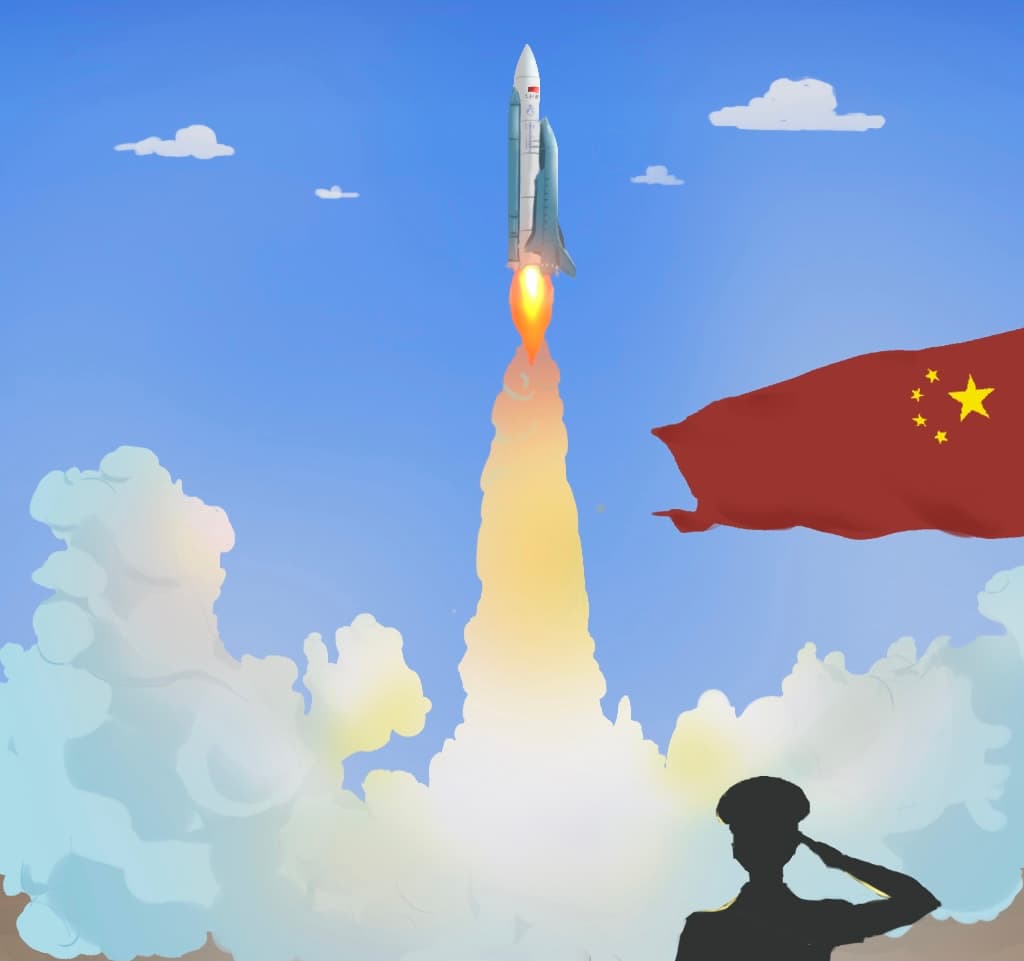
The PRC's space sector now relies not only on state-owned companies but on start-ups and other privately established enterprises. We see increasingly more movement in the space industry, as more and more launch vehicles are tested, and more payloads are launched into orbit every few months. The test flights of new rockets, such as i-Space's Hyperbola 1 or CALT's Long March 8, provide the ongoing space program with crucial data on how to improve the vehicles' designs and integrate concepts such as partial or almost-full reusability into already existing spacecraft.
China's Strengths and Weaknesses
As with any economy, the Chinese space sector has its strengths and weaknesses that play a major role in shaping their present and future on the global space market. The growth of PRC's space industry could be linked to many different factors such as a well-educated workforce and high availability of capital that create an efficient work environment within the sector. A major part of the space industry's personnel is reported to be rather younger people with only up to a few years of experience, that, however, rely heavily on creative thinking and are ready to embrace long working hours and give their best.
Furthermore, the growth of Chinese space businesses is promoted by the government through policy support or financial investments from state-owned entities that see the development of national space technologies and the growth of domestic companies as very beneficial to the future national space economy. Another strength of the Chinese space market could be that it's largely unencumbered by foreign competitors, which could potentially allow local businesses to seize the domestic space industry and significantly grow in the process.
The Chinese are starting from scratch. They're not hindered by long space traditions.
However, with the Chinese space sector still having relatively little experience, private or government-backed space entities lack some of the important business and technical know-how that US or European companies already have. The restrictions imposed on collaborating with foreign corporations and reduced information flow between Chinese and offshore companies can lead to some firms not having access to cutting-edge technologies and information currently used by companies in other markets. This is one of the reasons why domestic companies, so far, have rather aimed for working with less well-developed markets, such as Southeast Asia or Africa.
The Foreseeable Future of US-China Relations
The Chinese space economy has big growth potential, yet it still needs some time to adapt to the principles of new space. So far, Chinese companies have rather focused on improving their reach in the domestic space market as it has a large potential for future expansion and allows them to worry less about competing with foreign entities or facing market restrictions.
The restrictions laid upon exchanging data and working with non-Chinese companies mean that the US-China space situation is more likely a case of an intercontinental competition rather than building up the industry through collaboration with businesses that already have the space expertise. This, however, means that as of now larger-scale space cooperation between US and Chinese space businesses is rather unfeasible.
China has already built up crucial foundations for the future growth of their space sector and plans to move away from relying on foreign solutions, for instance, by deploying their own space station into orbit. This will most likely help speed up the development of domestic space technologies and allow China to have bigger control over what research is carried out. The rapid development of Chinese space technologies, a market that isn't accessible by US companies, the establishment of the Chinese space station, as well as the ongoing competition between the largest economies in the world, all mean that it's quite likely that the current state of affairs will carry on for quite a bit longer, and extend far into space.