How Web3 is Democratizing Space
While it might seem like actual space travel is something for only the wealthiest among us, Web3 is on track to democratize space and make it accessible to everyone. Through tokenization, blockchain infrastructure, and decentralized finance, individuals of any economic background can now participate in the space economy.
The Space Access Problem
Historically, space has been the exclusive domain of nation-states and billionaires. Government space programs required massive taxpayer investments. Private space ventures demanded billions in capital from ultra-wealthy individuals or institutional investors. Satellite data, space missions, and space assets were completely inaccessible to ordinary people and small businesses.
This centralization created inefficiencies: tremendous capital barriers to entry, limited competition, slower innovation, and concentrated control over space resources. The space economy remained a closed club—and only the most powerful nations and richest individuals could play.
The estimated value of the space economy exceeds $500 billion annually. Yet, access to this wealth was locked behind impossible barriers for 99.9% of humanity.
Web3 as the Solution
Web3 technology—blockchain, smart contracts, and tokenization—removes these barriers. It enables:
- Fractional Ownership - A $1 billion space asset can be divided into millions of pieces, each affordable for regular investors
- Transparent Transactions - All ownership and profit flows are recorded on immutable blockchains
- Programmable Rights - Smart contracts automatically enforce agreements and distribute profits
- Global Access - Anyone with internet and crypto can participate, regardless of geography or background
- Reduced Friction - No need for traditional financial intermediaries, legal structures, or geographic restrictions
How Democratization Works
Imagine a satellite costing $500 million. Under the old model, you'd need $500 million or access to it. Under Web3, that satellite gets tokenized into 500 million tokens at $1 each. Now, anyone with $1 of cryptocurrency can own a piece.
The tokens are listed on a decentralized marketplace. You buy them through a simple interface. Smart contracts automatically:
- Track satellite data streams and profits
- Distribute revenue proportionally to all token holders
- Allow you to trade tokens on secondary markets anytime
- Enable governance voting on satellite usage decisions
This is not hypothetical. This is happening today through platforms like Copernic Space, which tokenizes space assets and connects investors with real space ventures.
Real Examples Today
Tokenized Lunar Cargo
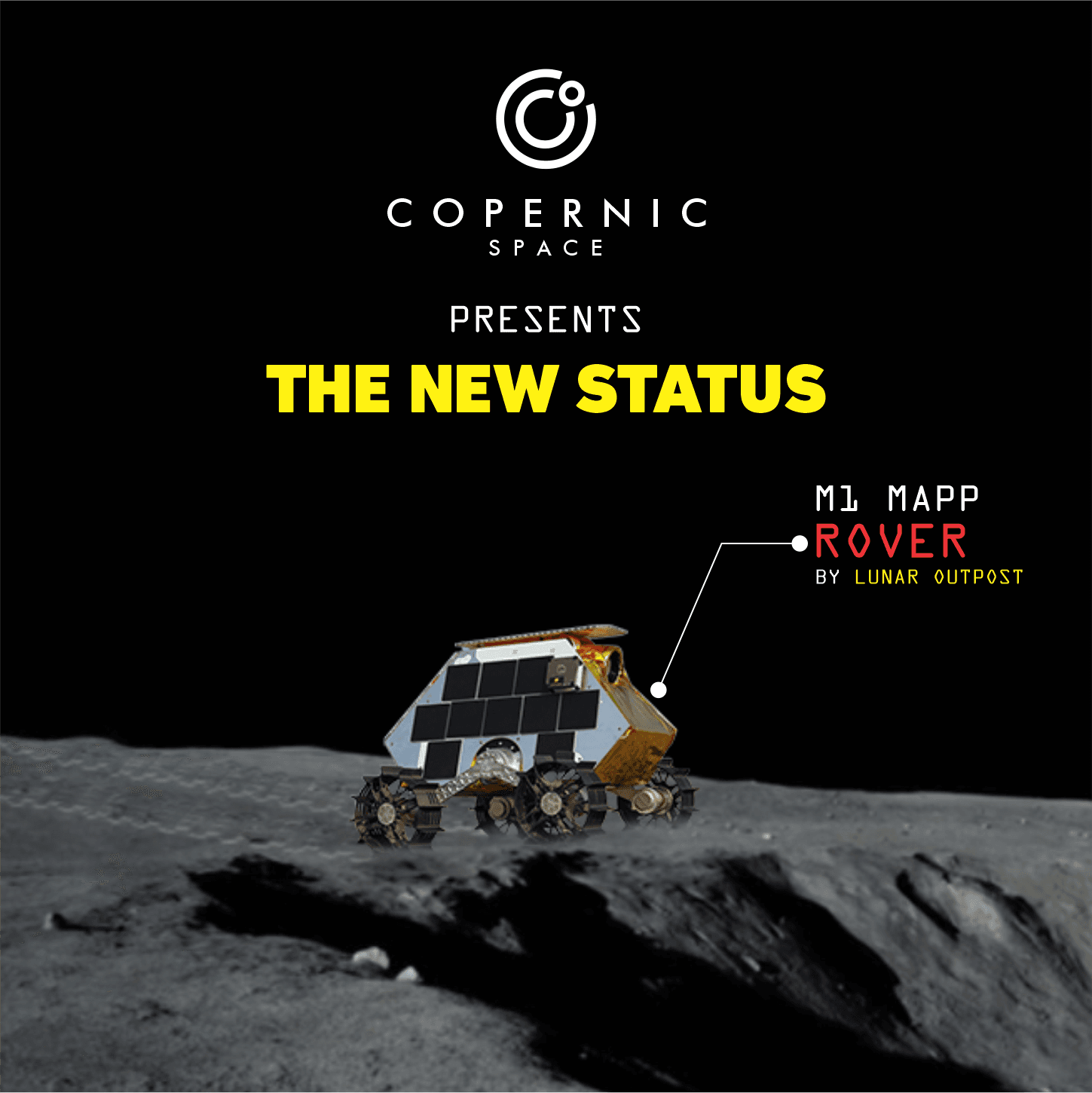
Copernic Space and Lunar Outpost enabled the sale of tokenized cargo space on the MAPP Rover headed to the Moon. Instead of cargo space being allocated by government or only available to wealthy corporations, individuals worldwide could purchase NFTs representing ownership of cargo space. These became tradeable assets with real physical consequences on the lunar surface.
Satellite Data Marketplace
Earth observation satellite data—previously only available to governments and massive corporations—is now tokenized and sold on decentralized marketplaces. Farmers, urban planners, researchers, and entrepreneurs can purchase specific data rights as NFTs, accessing information that was previously inaccessible.
SpaceX Launch Participation
Through tokenization platforms, investors can now buy fractional ownership in launch capacity and payload space. This distributes the economics of space missions across thousands of participants rather than concentrating them in a few entities.
The Future of Space Ownership
As Web3 infrastructure matures, we'll see exponential expansion of space tokenization. Every satellite, rocket, space station, mining operation, and space real estate claim could be tokenized and traded on global markets. The $500 billion space economy becomes accessible to billions of people.
This democratization doesn't just create investment opportunity—it creates incentive alignment. Space entrepreneurs can fund ventures directly from the people and investors who care about their mission. Communities can participate in decisions about how space resources are used. Innovation accelerates because capital flows to the best ideas, not just to whoever can convince billionaires.
Web3 is not just about making space accessible to more people. It's about fundamentally restructuring who controls space and who benefits from humanity's expansion into the cosmos. It transforms space from a billionaire's playground into humanity's shared frontier.
Web3 is democratizing not just space access, but space ownership. Every person, regardless of wealth or geography, now has the opportunity to own a piece of humanity's future among the stars.
Start Your Space Journey
Own a piece of space today. Access the Copernic Space marketplace and join thousands of investors building humanity's future in the cosmos.